I thought my mom had turned time with her grandson into a transaction. Then one strange detail made me realize I had no idea what she was doing.
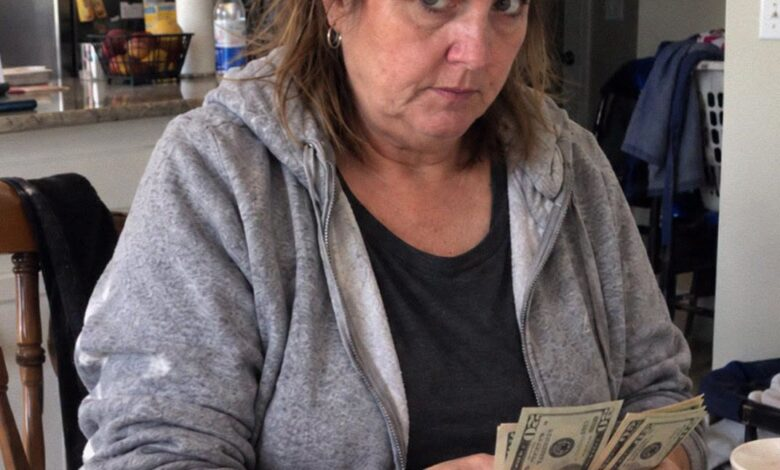
I stared at my mother through the phone like she could somehow see my face.
“What do you mean, you can’t?”
Then she said, “I can’t stop charging you.”
Not because it was funny.
Because I had spent the last two months trying to understand why my 66-year-old mother had suddenly turned babysitting her own grandson into a cash-only business.
“Mom, that makes no sense.”
“No, seriously. You used to get offended if we hired someone else.”
“You used to say, ‘Bring me my grandson.’”
“I remember that too.”
“Now it’s $40 every time he walks through your door.”
Then she said quietly, “I need you to trust me a little longer.”
“Trust you with what?”
“I can’t explain yet.”
I felt my irritation come rushing back.
“Then don’t be surprised when we stop asking you to babysit.”
Her voice changed immediately.
“Please don’t do that.”
“Then tell me what’s going on.”
There it was: that word again.
I should probably explain why this had become such a big deal.
My mom, Diane, has watched my son Caleb since he was a baby.
Usually when my husband Ryan and I got stuck at work, had appointments, or wanted the occasional dinner where nobody asked us to cut chicken into smaller pieces.
Mom always volunteered. Actually, “volunteered” is too mild.
She practically demanded access.
If I mentioned hiring a sitter, she’d say:
“What am I, a stranger?”
“Why would you pay somebody when I live 15 minutes away?”
Mom keeps dinosaur-shaped chicken nuggets in her freezer because they’re his favorite.
There is still a plastic step stool beside her bathroom sink.
His drawings cover one side of her refrigerator.
She has pajamas for him in a dresser drawer.
So when she first told me she wanted $40 to watch him, I thought she was joking.
It happened about two months earlier.
Ryan had to work late on a Thursday, and I had a parent meeting at Caleb’s school.
“Can Caleb stay with you after school? I’ll pick him up around 8:30 p.m.”
“Just bring $40 when you come.”
I laughed. She didn’t.
I remember sitting up straighter.
“I’m not charging much.”
“That’s not what I asked.”
“If you don’t want to pay, find somebody else.”
That hurt more than I expected.
Not because grandparents owe anyone free childcare.
It was the suddenness.
Mom had watched Caleb hundreds of times without taking a dime.
She’d bought diapers when he was little.
She’d taken him to the zoo.
She’d driven across town because he left his stuffed dinosaur at her house and apparently sleep was impossible without it.
Now she wanted cash at the door.
Still, I needed the help.
The next week, it happened again.
Sometimes she had Caleb for four hours.
Sometimes 90 minutes.
Same price. Cash only. That part became especially strange.
After the fifth time, Ryan said:
“Do you think she’s having money problems?”
Her house had been paid off for years.
She got Social Security and a small pension from the school district where she’d worked as a secretary for almost 30 years.
This woman rinsed out Ziploc bags because, in her words, “Nothing happened to them.”
Suddenly collecting $40 fees from us didn’t fit.
Then came the wedding we attended.
Mom watched Caleb from late afternoon until around 10:30 p.m.
When we picked him up, he was asleep on her couch under the same faded blue blanket I’d used as a kid.
I carried him to the car while Ryan grabbed his backpack.
As I turned to leave, Mom said quietly:
I knew exactly what she meant.
I opened my wallet. All I had was a $20 and a $100.
“I’ll bring you the rest tomorrow.”
“I need the $40 tonight.”
That irritated me instantly.
She looked toward the living room.
She disappeared into her bedroom and came back with $60 in exact change.
On the drive home, I told Ryan I was done.
“I’d rather pay an actual sitter.”
“At least then we know what the arrangement is.”
For the next three weeks, we didn’t ask Mom to watch Caleb once.
Of course she noticed.
She called twice asking why she hadn’t seen him.
I said we’d been busy.
Then came the phone call where she asked:
“Are you upset about the money?”
“Please don’t stop bringing him here because of that.”
“Then stop charging us.”
“What does that mean?”
This time, she was quiet for so long I thought the call had dropped.
“Come over tomorrow after work. Alone.”
My stomach tightened.
“Because I need to show you something.”
“Mom, are you in trouble?”
“Is somebody taking money from you?”
By the time I got to her house the next evening, I’d imagined everything.
Debt. Scam. Gambling. Someone threatening her.
A secret medical bill.
Mom opened the door before I knocked.
That almost made it worse.
On the kitchen table sat a metal cash box.
Inside were envelopes.
Each had a date written across the front.
And one thing printed at the top in black marker: “CALEB.”
She took out the first envelope.
Every payment we’d given her was still there.
I stared. “You kept all of it?”
She pushed a small notebook toward me.
Dates. Amounts. Notes.
“Thursday, School meeting – $40.”
Another, “Saturday wedding – $40.”
Then I saw a total at the bottom.
It was much higher than the amount we’d paid.
“Why is there more money here?”
Mom folded her hands.
“Because I’ve been adding to it.”
My irritation disappeared.
Then said, “For Caleb.”
“Obviously. His name is on every envelope.”
I still didn’t understand.
Then she reached into the cash box and pulled out a brochure.
It was from a pediatric hospital foundation.
I looked at the front. Then at her.
“Do you remember when Caleb was three and had that heart murmur?”
My chest tightened immediately.
Of course I remembered.
At one of his checkups, his pediatrician heard something.
We spent almost two weeks terrified.
Then the cardiologist told us it was an innocent murmur.
Nothing dangerous. Nothing that required treatment.
I still remembered crying in my car afterward from relief.
“Do you remember the little boy in the waiting room?”
There had been a lot of children.
Then I vaguely remembered one.
Maybe five years old. Thin. Wearing a red superhero cape.
“How do you know that?”
Mom had gone with us to one of the appointments.
Ryan couldn’t get off work, and I had been too nervous to go alone.
“His grandmother and I talked while you were with the doctor.”
“Noah had a congenital heart condition. He’d already had two surgeries.”
“His grandmother told me they were drowning.”
She rubbed her thumb across the edge of the brochure.
“His mother had reduced her hours. His father had lost his job. They had insurance, but not enough.”
I still didn’t understand what this had to do with Caleb or $40.
“That day scared me.”
“No, not only because of Caleb.”
“I realized how lucky we were.”
“Caleb walked out healthy.”
“That little boy didn’t.”
“He died the following year.”
“I found out because his grandmother sent me a Christmas card.”
Mom gave a sad little smile.
“We exchanged numbers that day.”
My mother could make a friend in a pharmacy line.
“After Noah died, his family started a small fund through the hospital. It helps families with food, parking, hotels, things insurance doesn’t cover.”
I looked at the brochure again.
“You’re donating the babysitting money?”
“Every time you pay me $40, I put in $40 of my own.”
That explained the total.
“But why make us pay?”
Mom looked uncomfortable.
This, apparently, was the part she had been avoiding.
“Because I wanted it to become Caleb’s money too.”
“That doesn’t make sense.”
“I know it sounds strange.”
Then pulled out another paper.
It was a simple savings chart.
CALEB’S HELPING FUND.
I felt something in my chest shift.
“When he turns ten, I want to tell him about it.”
“That every time he came to Grandma’s house, part of that day helped another family.”
I didn’t say anything.
She continued quickly.
“Not because he owed anyone. Not because you owed me. I just…”
“I wanted him to grow up knowing ordinary things can help somebody.”
I looked at the envelopes again.
“Then why not just ask us to donate?”
“Because you would’ve said yes once.”
“You would’ve sent a $100, felt good, and moved on.”
“I wanted it to continue.”
“Then why not tell me?”
“Because I wanted to surprise you.”
“It worked better in my head.”
That actually made me laugh.
A real laugh this time.
Mom smiled carefully. Then I got serious again.
“But the wedding night.”
“When you insisted on getting the $40.”
She reached deeper into the box and pulled out a receipt.
The date was the same night.
A local grocery store.
Gift card purchase. Forty dollars.
“I’d promised the hospital fund I’d drop off a grocery card the next morning.”
“You could’ve just told me.”
“You let me think you were charging admission to see your grandson.”
“I stopped bringing him here.”
That took the humor out of it.
“Why didn’t you just explain when you realized I was upset?”
“Because I thought if I explained, you’d feel guilty and start paying more.”
“You created a problem trying to prevent a different problem.”
“That does sound like me.”
Unfortunately, it did.
Then something else occurred to me.
“Does Ryan know any of this?”
She looked surprised.
“Because I want to tell him.”
That night, Ryan sat at our kitchen table while I explained everything.
He didn’t interrupt until I finished.
“So your mother turned babysitting into a secret charity subscription.”
“And didn’t tell us.”
“And got offended when we stopped using the service.”
“This family is exhausting.”
“How much is in the box?”
“That’s actually pretty great.”
We decided to keep the $40 arrangement.
The next time Mom watched Caleb, I handed her $40.
Then Ryan handed her another $20.
She immediately shook her head.
“Now I understand where you get it.”
A few months later, Mom changed the system again.
She started letting Caleb help.
With choosing what the fund bought.
One month, the hospital needed gas cards.
Another month, grocery cards.
Once, they needed pajamas and socks for families who had unexpectedly long hospital stays.
Mom showed Caleb a list.
He picked dinosaur pajamas.
He still doesn’t know the entire story behind the money.
For now, he just knows Grandma has a “helping box.”
Sometimes he puts spare change in it.
Once he added a plastic dinosaur.
“That’s not money,” I told her.
Last week, Mom watched Caleb while Ryan and I went to dinner.
When we picked him up, I handed her $40.
“Why do you give Grandma money?”
Mom and I looked at each other.
For a second, I wondered whether the secret was over.
“Because sometimes grown-ups make deals.”
Caleb considered that.
“The kind you’ll understand when you’re older.”
He shrugged and went back to putting on his shoes.
On the drive home, Ryan said:
“You know he’s going to figure it out before ten.”
“He has your mother’s curiosity.”
But here’s the part that changed for me.
At first, I was furious because I thought Mom had taken something loving and turned it transactional.
I thought the $40 meant babysitting Caleb had become work.
To her, it meant the opposite.
She was trying to take something she already loved doing and let it create something beyond our family.
Her execution was terrible. I have told her that repeatedly.
A few weeks ago, she showed me the latest total in the notebook.
I stared at the number.
“Almost enough to cover a month of hotel assistance for one family.”
“You know you could just donate without making me drive to an ATM every time.”
Then she closed the cash box.
On the lid, Caleb had recently added a sticker.
A green dinosaur wearing sunglasses.
Mom had written underneath it:
Then, in smaller letters:
“Forty dollars at a time.”
I used to think that $40 was what my mother charged to watch my son.
It was what she used to teach all of us that being lucky shouldn’t end with being grateful.
Sometimes it should turn into something useful.
If your parent suddenly started charging to babysit after years of doing it for free, would you keep paying or find someone else?
If this story kept you hooked, here’s another one for you: She found the twin sister her mother had been separated from years ago. What the family uncovered next changed everything. Click here to read the full story.
The information in this article is not intended or implied to be a substitute for professional medical advice, diagnosis or treatment. All content, including text, and images contained on amoMedia.com, or available through amoMedia.com is for general information purposes only. amoMedia.com does not take responsibility for any action taken as a result of reading this article. Before undertaking any course of treatment please consult with your healthcare provider.