My twin brother, Ryan, and his wife, Melissa, had spent years desperately trying to have a baby. So when they finally asked if I would consider becoming their surrogate, I said yes.
Ryan had been more than just my brother—he had been my best friend for my entire life. He had always supported me and never failed to be there when I needed him. Since I already had a son of my own, I knew exactly what kind of love and hope they were longing for. I wanted to give them that chance. Especially because whenever I saw Ryan with my son, he seemed happiest when they were together.
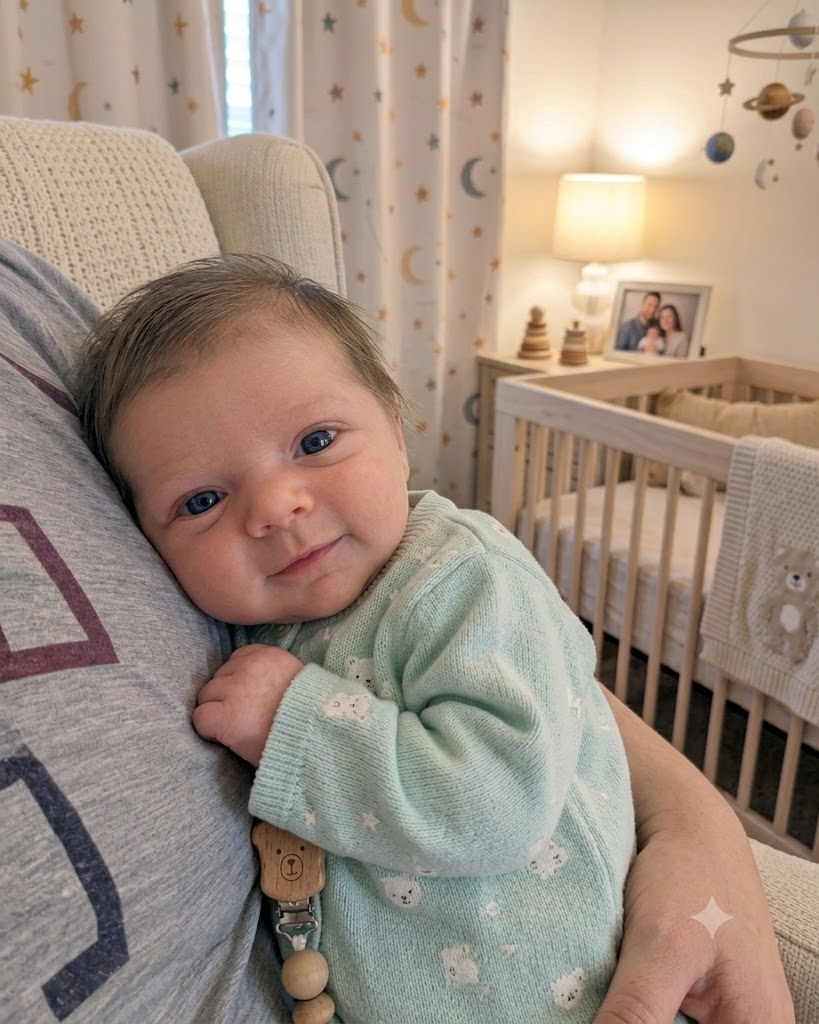
When they learned the baby was a girl, they couldn’t contain their excitement. They bought tiny dresses, little toys, and even painted the nursery pink.
Then the day finally came when I gave birth.
Ryan and Melissa rushed to my hospital room. The moment Melissa saw her daughter, tears of pure joy filled her eyes.
Then Ryan picked up the baby.
He stared at her for several seconds.
Suddenly, the color drained from his face.
I asked if he was okay, and he answered in a trembling voice:
“I’m sorry, but… I can’t take her.”
For a moment, I thought I had misunderstood him.
“Ryan, she’s your daughter. What are you talking about?”
He looked directly at Melissa.
Then he turned toward me and said:
“I’m sorry, but I’m not taking her home with me!”
And he placed the baby back into my arms.
Tears streaming down her face, Melissa demanded to know why they couldn’t take their daughter home.
Ryan exhaled heavily. His face had turned red as he said:
“Look at her back. We can’t do this. She can’t be our daughter.”
I looked at the baby’s back—and nearly fainted.
Melissa screamed so loudly that people throughout the entire floor could hear her. Within moments, hospital staff came rushing into the room to find out what had happened.
The hospital room erupted into chaos.
Melissa was crying uncontrollably, repeating that the doctors had told them everything was fine. Ryan couldn’t even look at her. He stood there staring at the floor, then suddenly turned and walked out of the room.
I was left sitting on the hospital bed, still exhausted from giving birth, with a newborn baby in my arms who had just been rejected by her own father.
Nurse Bianca came over and gently placed a hand on my shoulder.
“Just breathe, Ivy. You’re okay.”
I looked down at the tiny girl wrapped in the blanket. Her eyes were closed, and her little mouth moved as if she were searching for something.
I pulled her closer.
“You’re not going anywhere,” I whispered. “Do you hear me? You’re not going anywhere.”
But I still didn’t understand why Ryan had done it.

Three days later, he showed up at my house.
She was sleeping peacefully in a bassinet near the window while my seven-year-old son, Gabriel, was in his room. Ryan stood across from me in my kitchen, looking exhausted.
“You don’t get to just walk into my house after what you did,” I told him.
“Ivy, please. Just let me explain.”
“Explain? I’ve barely slept since you left that hospital room with your daughter in my arms.”
He lowered his head.
“The doctors said she’d need surgery. Maybe more than one. There would be therapy, specialists, braces… years of medical care.”
“That doesn’t explain why you abandoned her.”
Ryan finally looked at me.
“I lost my job four months ago.”
I froze.
“What?”
He told me he’d been fired shortly after the second-trimester ultrasound. He hadn’t told Melissa. Every morning, he dressed as if he were going to work, then spent the day in coffee shops applying for jobs and pretending everything was normal.
The nursery, the baby clothes, even the things they’d bought for Hope—he had been paying for them with credit cards.
“There was no money left,” he whispered. “I had three credit cards maxed out. I was already drowning.”
I stared at him.
“And when you heard the baby might need surgery?”
Ryan’s eyes filled with tears.
“I panicked.”
He admitted that when he saw the mark on Hope’s back and heard the doctors mention surgery, something inside him broke. He realized he couldn’t afford the medical expenses and became terrified that Melissa would discover how badly their finances had collapsed.
“So you used your own daughter as an escape?” I asked.
He didn’t answer.
“Say it.”
His voice cracked.
“I used my daughter as an exit because I was drowning, and I couldn’t tell my wife.”
For a moment, I couldn’t even speak.
This was the same brother who had stood beside me after our parents died. The same man who had supported me when Gabriel’s father walked away.
And now he had looked at his own newborn daughter and decided that abandoning her was easier than admitting he had failed financially.